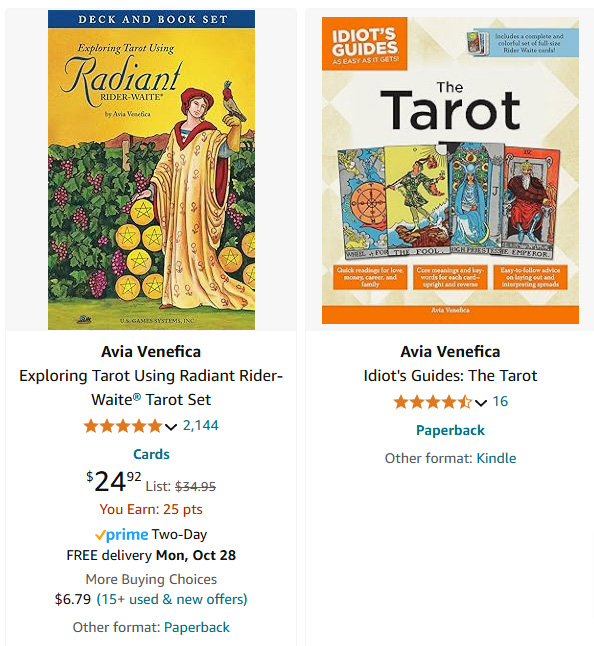
Quick Answer: In my experience, the best tarot decks for beginners are the ones with clear imagery, strong symbolism, and guidebooks that don’t make you feel like you need a PhD in medieval mysticism just to understand why somebody is falling out of a tower.
For most people, I still recommend a Rider-Waite tarot deck for beginners because so many modern tarot books, tutorials, and beginner tarot card meanings are based on that system. If you’re serious about learning tarot for beginners, it gives you the strongest foundation and makes it much easier to understand the symbolism behind the cards later on.
That said, not everybody connects with the traditional Rider-Waite artwork. Some people want beginner-friendly tarot decks with softer imagery, modern artwork, or tarot decks with simple meanings that feel less intimidating. And honestly? That matters too. If your first tarot deck makes you excited to pull cards every day, you’re far more likely to stick with it.
After reading tarot for nearly 30 years, I’ve found the easiest tarot deck to learn is usually one that combines:
- clear card imagery
- emotionally readable symbolism
- intuitive visual storytelling
- a quality guidebook
- and a deck style that actually resonates with you
Some of the best beginner tarot deck options include:
- Classic Rider-Waite-based decks
- Tarot decks that explain themselves visually
- Beginner tarot decks with guidebooks
- Tarot decks for intuitive reading
- Tarot decks with keywords on cards
- Best modern tarot decks for beginners that keep the symbolism approachable without watering it down
If you’re wondering what is the best tarot deck for beginners is, the real answer is this:
Choose a deck that feels inviting, readable, and emotionally accessible, not one that makes you feel like you accidentally wandered into an occult final exam after missing 14 weeks of class.
The good news is that there are plenty of good tarot decks for beginners now that are beautifully designed, easy to read, and genuinely helpful for tarot decks for new readers who want to build confidence without overwhelm.
Why Your First Tarot Deck Matters More Than Most People Realize

A lot of people assume any tarot deck will do.
Technically? Sure.
But after nearly 30 years of reading cards, teaching tarot, and watching beginners either flourish or flame out spectacularly after three confused readings and one existential crisis involving the reversed Seven of Cups…I can tell you your first tarot deck matters a lot more than most people realize.
The truth is, some beginner tarot decks genuinely make learning easier.
Others accidentally make new readers feel overwhelmed, disconnected, or convinced they “can’t read tarot” when the real problem is the deck itself.
That’s why choosing the best tarot decks for beginners is less about aesthetics and more about communication.
Your first tarot deck becomes your symbolic language teacher.
It teaches you:
- how tarot imagery communicates emotion
- how symbolism tells a story
- how intuition and structure work together
- and how to recognize patterns in readings without memorizing 78 textbook definitions like you’re cramming for Wizard SATs
This is especially important when learning tarot for beginners because the brain learns symbols visually before it learns them intellectually.
That’s why tarot decks with clear imagery tend to work better for new readers than overly abstract decks loaded with cryptic artwork, obscure references, or symbolism that requires a decoder ring and a semester abroad in Renaissance alchemy.
A good first tarot deck should help you see the meaning.
Not fight with it.
That’s one reason the Rider–Waite Tarot Deck is still considered one of the easiest tarot decks to understand. The imagery is direct, emotionally expressive, and foundational to many beginner tarot card meanings taught in books, courses, and online resources.
Even many of today’s best modern tarot decks for beginners are built on the Rider-Waite system because it provides such a strong framework for tarot decks for learning symbolism.
And honestly, confidence matters more than people think.
When beginners use tarot decks that are easy to read, they practice more.
When they practice more, they build trust in themselves.
When they build trust in themselves, tarot stops feeling intimidating and starts becoming something deeply personal, insightful, and surprisingly empowering.
That’s why I usually recommend:
- beginner-friendly tarot decks
- tarot decks with simple meanings
- tarot decks for intuitive reading
- beginner tarot decks with guidebooks
- and tarot decks for people intimidated by tarot
Because your first tarot deck shouldn’t feel like punishment.
It should feel like an invitation.
The Best Tarot Decks for Beginners (Recommended by a 30-Year Tarot Reader)

After nearly three decades of reading tarot, teaching tarot, studying symbolism, and watching beginners accidentally terrify themselves with wildly misunderstood Death cards, I’ve noticed something important:
The best tarot decks for beginners are usually the ones that reduce overwhelm while increasing connection.
That means:
- clear imagery
- emotionally readable symbolism
- intuitive flow
- manageable visual energy
- and beginner-friendly layouts that help new readers build confidence instead of panic-Googling “why did I pull The Tower three times?”
Not every deck teaches the same way.
Some tarot decks for new readers are better for visual learners. Others help intuitive readers. Some are excellent for memorization. Others gently train symbolic thinking over time.
These are the beginner tarot decks I consistently recommend most often.
1. Wyspell Tarot for Learning
(Best for Visual Learners & Memorization)
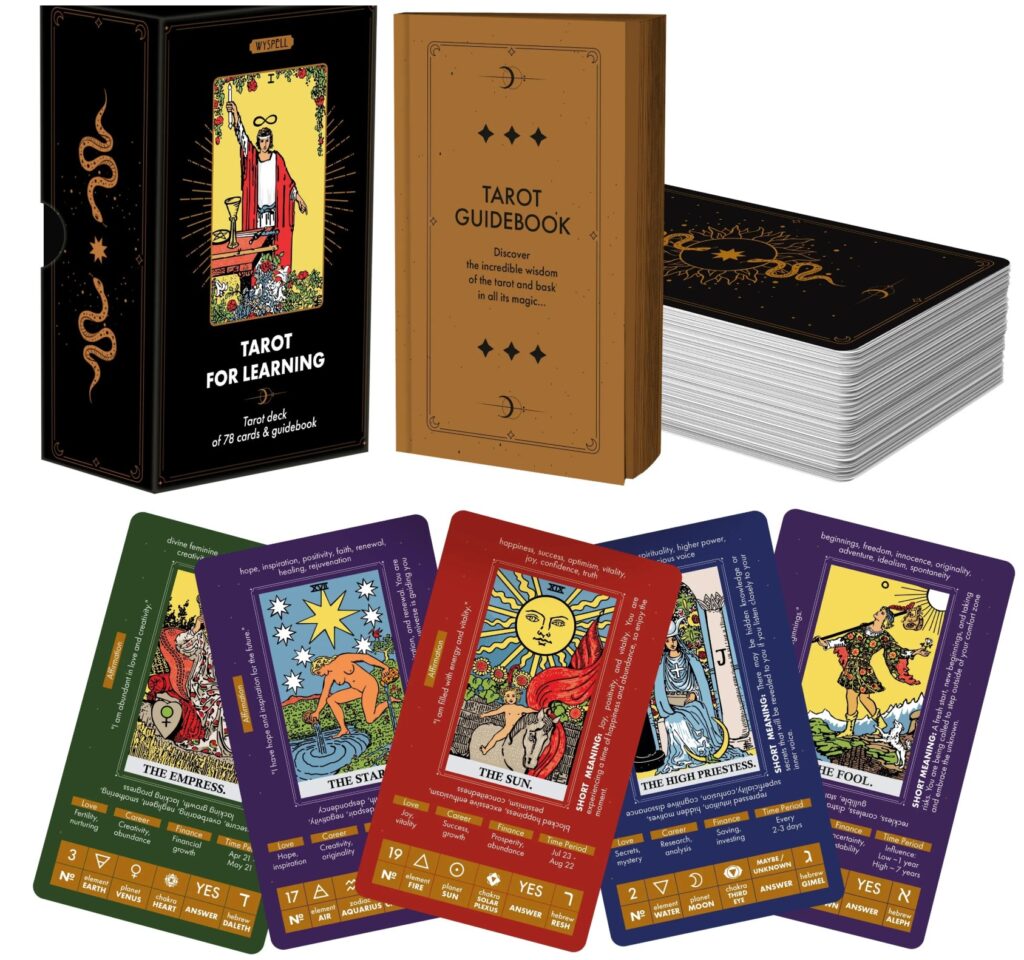
If you’re the kind of person who learns by seeing information repeatedly, this may honestly be one of the smartest beginner tarot decks on the market right now.
The Wyspell Tarot for Learning places beginner tarot card meanings, suit associations, astrological references, elemental connections, yes/no guidance, and symbolic keywords directly on the cards themselves.
And before tarot purists clutch their pearls and faint dramatically into a velvet altar cloth, let me say this:
For many beginners, this works extremely well.
Why?
Because repetition builds familiarity.
Seeing tarot meanings repeatedly while actively reading helps many people absorb symbolism faster and retain information more naturally. It removes that constant “Wait…what does this card mean again?” interruption that can break intuitive flow during learning tarot for beginners.
I especially recommend this deck for:
- visual learners
- self-taught readers
- people intimidated by tarot
- analytical thinkers
- beginners who like structured learning
- and readers who want tarot decks with keywords on cards
This is one of the best tarot decks for self-reading if you’re trying to build confidence quickly without constantly flipping through guidebooks every six seconds like you’re studying for a very mystical open-book exam.
2. Hanson-Roberts Tarot
(Best Gentle Beginner Tarot Deck)
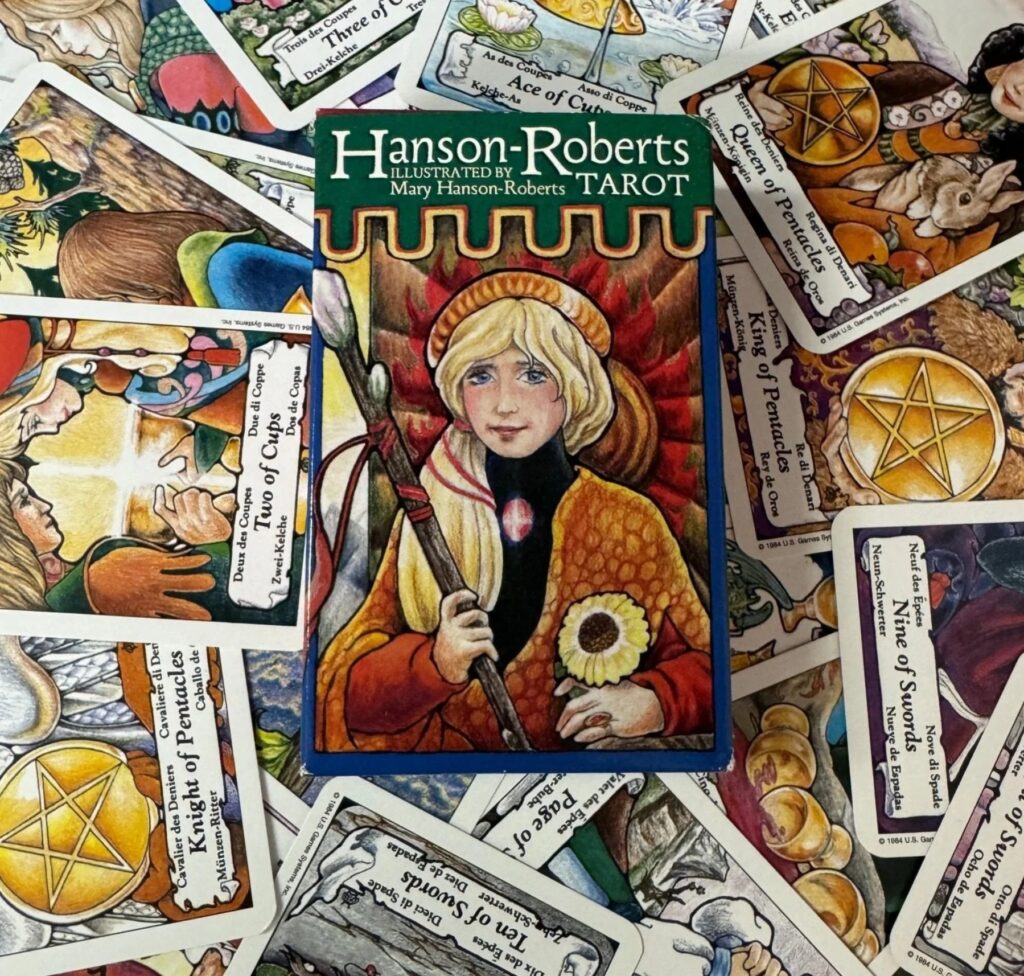
The Hanson-Roberts Tarot has been one of my favorite beginner-friendly tarot decks for years because it feels emotionally approachable.
That matters more than people realize.
Some decks are visually loud, intense, or overloaded with symbolism. The Hanson-Roberts deck softens the experience without sacrificing meaning. The imagery is simplified, clear, warm, and surprisingly intuitive while still staying closely connected to the Rider-Waite tradition.
The smaller card size also fits beautifully in the hands, which sounds minor until you’re awkwardly trying to shuffle giant tarot cards that suddenly explode across the room like spiritually charged playing-card confetti.
This deck is excellent for:
- sensitive or intuitive readers
- tarot beginners who feel overwhelmed easily
- people who dislike harsh imagery
- readers who want tarot decks with clear imagery
- and those seeking easy tarot decks for beginners
The artwork feels calm rather than chaotic, which helps many beginners stay emotionally connected to the reading instead of being mentally overloaded by it.
3. Simple Tarot by Angie Green
(Best Tarot Deck for Pure Meaning & Study)
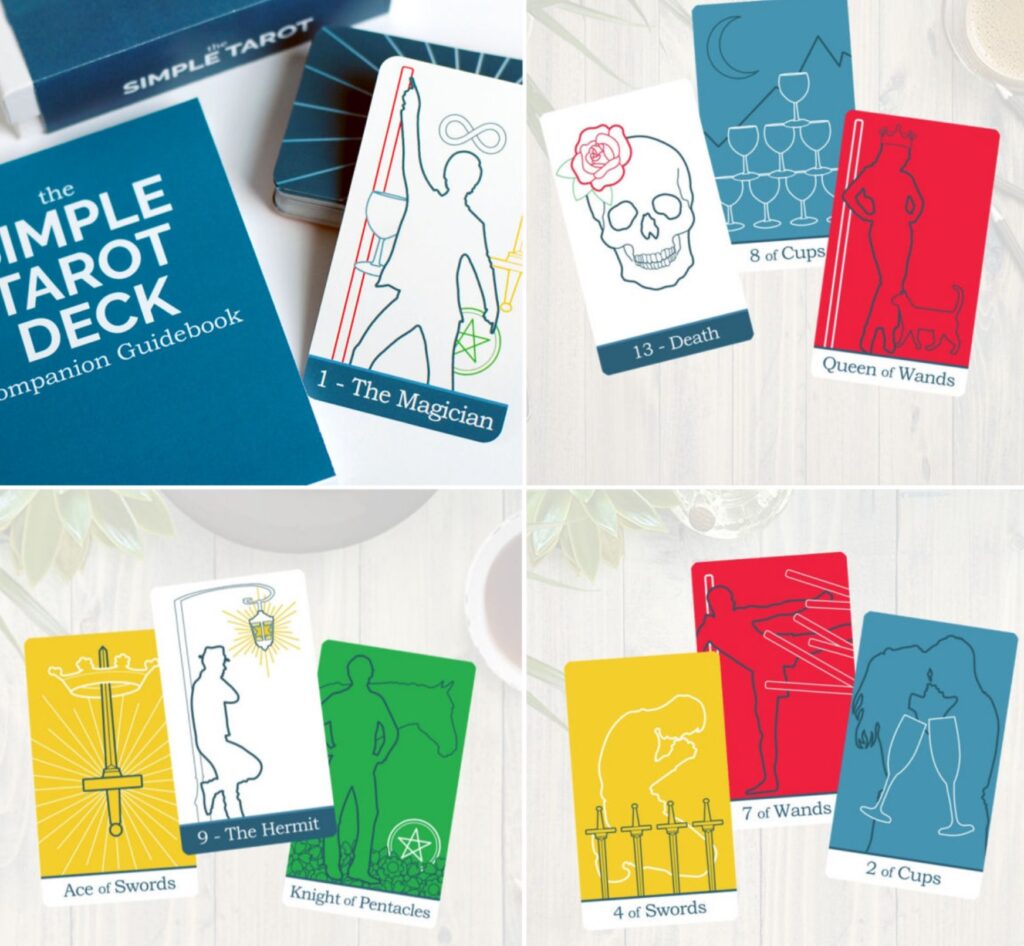
The Simple Tarot by Angie Green strips tarot down to its essential meanings in a way I genuinely respect.
No excessive visual clutter.
No symbolic overload.
No “What exactly am I looking at here?” confusion.
This deck focuses heavily on helping beginners quickly and clearly understand core interpretations. It’s one of the easiest tarot decks to learn because it removes distractions and drills directly into symbolic understanding and memorization.
I often recommend this deck to:
- students of tarot
- highly logical thinkers
- readers focused on memorization
- people wanting tarot decks with simple meanings
- and beginners struggling to retain card definitions
Some readers eventually outgrow ultra-simplified decks.
That’s normal.
But as a learning tool? This one is surprisingly effective.
Especially if you’re trying to create a strong symbolic foundation before moving into deeper intuitive reading.
4. Robin Wood Tarot
(Best Beginner Deck for Symbolism & Long-Term Growth)
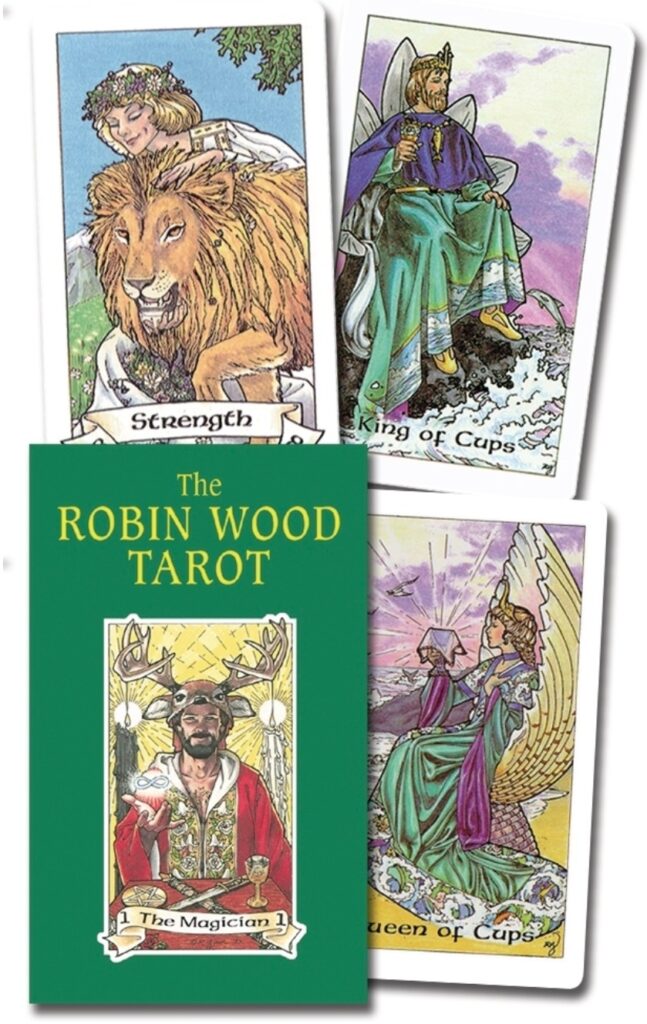
The Robin Wood Tarot is one of the most visually balanced Rider-Waite-based decks I’ve ever worked with.
It keeps the traditional symbolic structure intact while making the artwork feel warmer, more alive, and more emotionally immersive.
That’s important because many beginner tarot decks either:
- oversimplify symbolism
OR - become so artistically abstract that beginners lose the thread entirely
The Robin Wood Tarot finds a beautiful middle ground.
The imagery flows naturally, the colors are emotionally expressive without becoming chaotic, and the symbolism remains highly readable for learning tarot for beginners.
I especially recommend this deck for:
- creative thinkers
- intuitive readers
- people drawn to nature-based imagery
- readers wanting tarot decks for learning symbolism
- and beginners who want a deck they can grow with long-term
This is one of the good tarot decks for beginners that still holds incredible depth years later.
I’ve known professional readers who still use it decades into their practice (self included).
5. Aquarian Tarot
(Best Tarot Deck for Intuition & Flow)
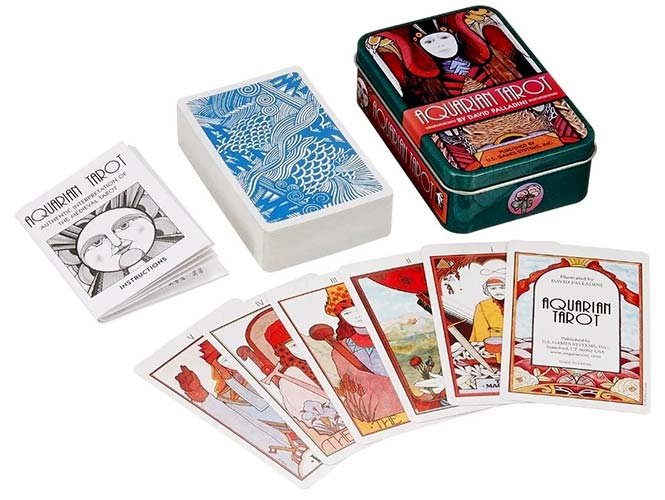
The Aquarian Tarot has a fluid, almost dreamlike quality that many intuitive beginners connect with immediately.
The artwork feels smooth and emotionally spacious rather than rigid or overwhelming. Even though it’s based on Rider-Waite symbolism, it interprets the imagery with softer movement and elegant visual rhythm.
Some tarot decks practically shout at you.
The Aquarian Tarot converses.
That subtle distinction matters.
This deck is especially useful for:
- intuitive beginners
- emotionally sensitive readers
- people drawn to softer visual energy
- readers seeking tarot decks that are easy to read
- and beginners who want symbolic clarity without visual heaviness
I’ve often found that people who struggle with harsher traditional decks suddenly relax when using the Aquarian Tarot. And relaxed readers usually become better readers.
Why Most Beginners Should Start With a Rider-Waite-Based Deck

If you ask me, “Should beginners start with Rider Waite tarot?” my answer is usually:
Yes…or at least start with a Rider-Waite-based deck.
And that recommendation has nothing to do with elitism, gatekeeping, or tarot snobbery wrapped in incense smoke and dramatic sighing.
It’s practical.
The Rider–Waite Tarot Deck became the foundation for a huge percentage of modern tarot teaching because its imagery revolutionized how tarot could be learned.
Before Rider-Waite, many tarot decks used simple suit symbols on the numbered Minor Arcana cards:
- swords
- cups
- wands
- pentacles
That’s it.
No illustrated scenes.
No emotional storytelling.
No visual narrative.
Then Pamela Colman Smith changed everything by creating fully illustrated symbolic scenes for every card in the deck under the direction of Arthur Edward Waite.
That mattered enormously.
Because humans learn visually.
Especially when learning tarot for beginners.
Instead of memorizing isolated definitions, readers could suddenly see emotional experiences unfolding in the cards:
- heartbreak
- celebration
- anxiety
- nostalgia
- teamwork
- exhaustion
- hope
- temptation
- transition
That visual storytelling is one of the biggest reasons Rider-Waite remains one of the easiest tarot decks to understand for new readers.
Most Tarot Books and Courses Teach Rider-Waite Symbolism
This is another huge reason Rider-Waite-based beginner tarot decks make life easier.
Most:
- tarot books
- online tutorials
- YouTube lessons
- tarot classes
- guidebooks
- and beginner tarot card meanings
…are built around the Rider-Waite system.
So if you’re using a wildly different deck while trying to follow beginner lessons, things can get confusing fast.
You’ll read:
“Notice the figure looking down sadly while carrying the swords…”
Meanwhile, your ultra-modern abstract deck contains:
three floating triangles, a holographic fish, and what appears to be an emotionally unavailable cactus.
Not ideal for beginner comprehension.
Using tarot decks for learning symbolism that stays connected to Rider-Waite imagery creates continuity between:
- your deck
- your learning resources
- your intuition
- and your developing a symbolic vocabulary
That dramatically shortens the learning curve for most people.
Rider-Waite-Based Doesn’t Mean “Old-Fashioned”
This is where beginners sometimes get tripped up.
A lot of people assume Rider-Waite-based decks must look ancient, stern, or visually intimidating.
Not true.
Many of today’s best tarot decks for beginners are Rider-Waite-based, while still feeling:
- modern
- soft
- artistic
- diverse
- emotionally intuitive
- visually calming
- and beginner-friendly
That’s why decks like:
- Robin Wood Tarot
- Aquarian Tarot
- Hanson-Roberts Tarot
…work so well for tarot decks for new readers.
They preserve the symbolic structure while making the experience feel more approachable.
And honestly, that combination is powerful.
Because beginners usually need two things at the same time:
- symbolic clarity
- emotional connection
A good Rider-Waite-based deck gives you both.
Eventually, You’ll Develop Your Own Style

Now, to be clear, you do not need to stay with Rider-Waite forever.
Most readers evolve.
Over time, you’ll probably discover:
- intuitive decks
- artistic decks
- oracle systems
- experimental symbolism
- darker decks
- minimalist decks
- weird indie decks that somehow feature ghost mushrooms wearing Victorian capes
Tarot readers are collectors by nature. It happens.
But starting with a Rider-Waite-based deck gives you one of the strongest foundations possible for understanding:
- symbolic patterns
- beginner tarot card meanings
- intuitive interpretation
- and long-term reading confidence
And once you understand the language of tarot, branching out becomes far easier, because you’re no longer trying to learn symbolism and interpretive structure at the exact same time.
What Makes Me Qualified to Recommend the Best Tarot Decks for Beginners?
I’m almost 30 years into a career of reading the cards. It started out as a random curiosity in my teens, and that curiosity grew into a full-on absorption with the tarot… its history, meaning, symbolism, and potential power as a resource for uncovering often-overlooked perspectives.
I already had five years of tarot reading under my belt when I decided to get certified by the ATA (American Tarot Society) back in the 90s. I did this while simultaneously pursuing certification in mediumship at the First Spiritualist Temple in East Aurora (which traces its roots in Spiritualism back to the mid 1800s).
Over the years, I’ve read for the rich, the poor, the sick and dying, living, and thriving. I’ve read on airplanes, trains, and automobiles. I’ve taught tarot and provided readings in my own private practice in a brick-and-mortar office as well as in carnivals, Renaissance festivals, psychic fairs, coffee shops, in my home, online, over the phone, and once in an elevator stuck between floors for two hours.
Through all my time with the tarot, I think it’s the sweet combination of listening, learning, observing, and exchanging (thought, ideas, tarot symbolism, all of it) that makes me uniquely qualified to recommend tarot decks for beginners. My current collection is about 40 decks, which is nothing compared to some…But I like to think that, between handling a ton of decks, providing tons of readings, teaching tarot to others myself, and learning over three decades, I’m a pretty good resource.
As always, thanks for reading, and I hope my insights on building the best deck for beginners have been helpful. Happy reading!
Mighty brightly,
© Copyrighted. All rights reserved.
FAQ: Best Tarot Decks for Beginners
The easiest tarot deck for beginners is usually one with clear imagery, simple symbolism, and a strong guidebook. Many new readers learn fastest with Rider-Waite-based beginner tarot decks because the artwork visually explains the meaning of the cards. Decks like the Hanson-Roberts Tarot, Robin Wood Tarot, and beginner decks with meanings printed on the cards can make learning tarot feel much less overwhelming.
For many people, yes. The Rider–Waite Tarot Deck is still considered one of the best tarot decks for beginners because most tarot books, courses, and online lessons teach Rider-Waite symbolism. The imagery is structured, emotionally readable, and excellent for learning beginner tarot card meanings and symbolic interpretation.
Technically, yes, but some tarot decks are much easier to learn from than others. Beginners often do best with beginner-friendly tarot decks that have clear imagery and recognizable symbolism. Extremely abstract, minimalist, or heavily stylized decks can make learning tarot for beginners far more confusing than necessary
Your first tarot deck should feel approachable, readable, and emotionally engaging. Many professional readers recommend starting with Rider-Waite-based tarot decks for new readers because they provide a strong symbolic foundation. If traditional imagery feels intimidating, beginner tarot decks with guidebooks, softer artwork, or tarot decks with simple meanings can also work beautifully.
Not always. Some of the best modern tarot decks for beginners are actually easier to connect with emotionally than older traditional decks. The key is whether the deck preserves clear symbolic storytelling. Modern decks that stay connected to Rider-Waite symbolism are often much easier to understand than highly abstract or experimental decks.
Yes, but balance intuition with practicality. A deck may look beautiful online, but if the imagery feels confusing or emotionally disconnected, it may not be the best beginner tarot deck for learning. The ideal first tarot deck combines intuitive appeal with clear symbolism and readable imagery.
Many experienced readers recommend Rider-Waite-based beginner tarot decks because they make learning symbolism easier. Popular recommendations often include:
-Hanson-Roberts Tarot
-Robin Wood Tarot
-Aquarian Tarot
-Rider–Waite Tarot Deck
beginner tarot decks with meanings printed on the cards
Professional readers usually recommend decks that encourage confidence, intuitive development, and long-term symbolic understanding rather than decks that overwhelm beginners with excessive abstraction or visual complexity.
Also on TarotTeachings.com
Howling Insights: Wolf Moon Tarot Tips You've Got to Try This January
How Reliable Are Yes/No Tarot Questions?
The Hierophant Tarot Card in Love Readings: Amorous Lessons From the Sage of Tradition
A New Year, a New You: Tips on Using the Tarot for Self-Care
Celtic Archetypes and the Tarot
Sunrise Reading: The Future of Tarot with AI Interpretation
Want More? Check Out Avia's Books on Amazon